

Key Modern Technologies Used
1- Jump Formwork System
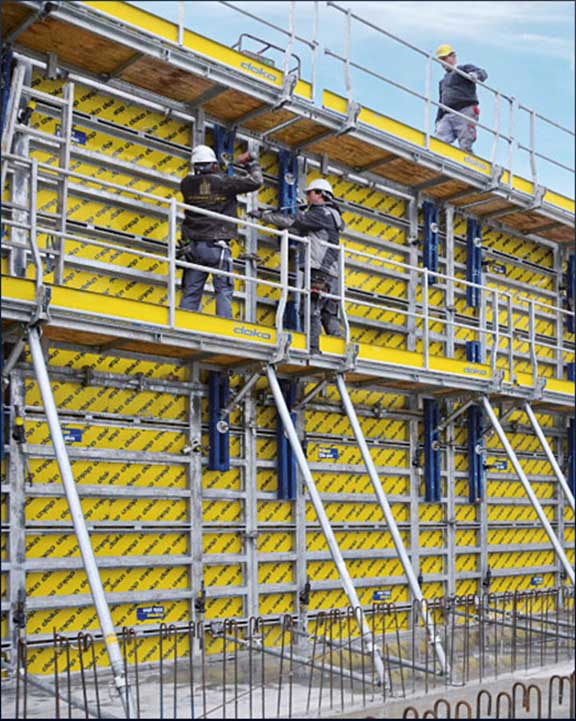
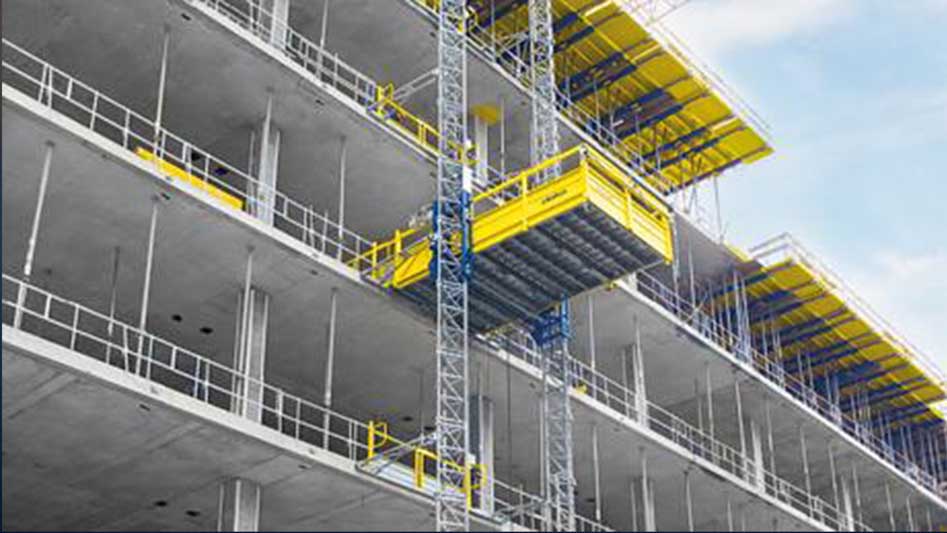
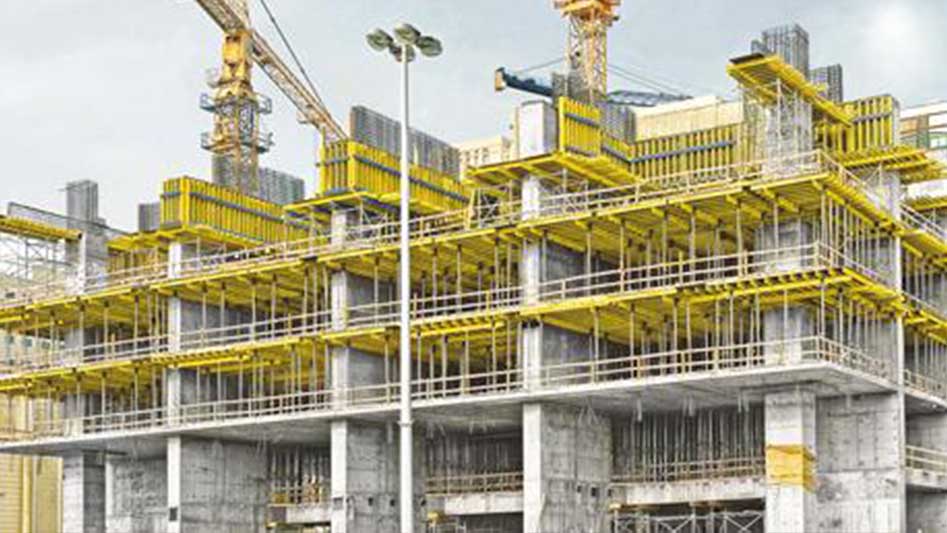
(Jump Form System - Doka Technology)
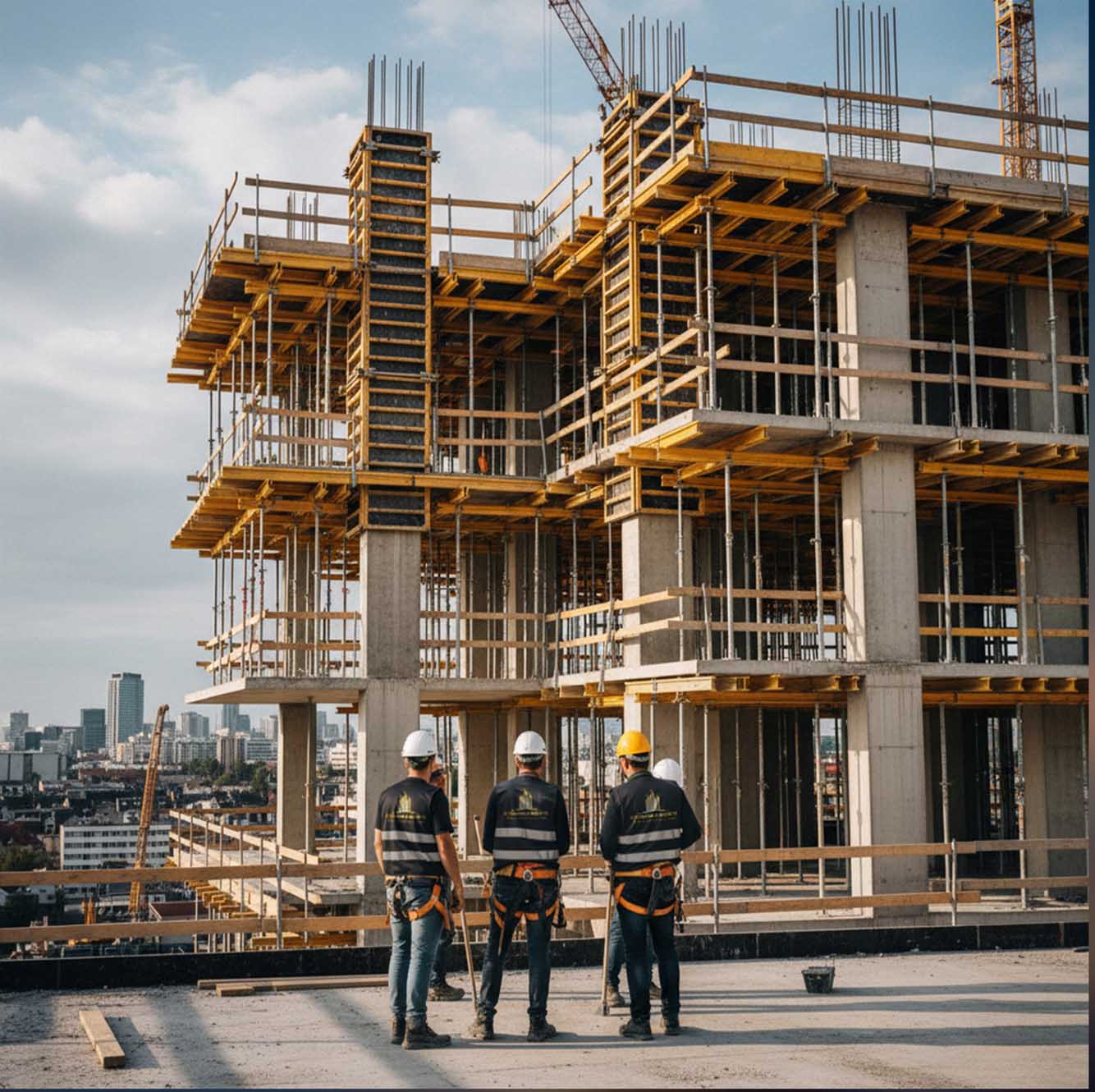
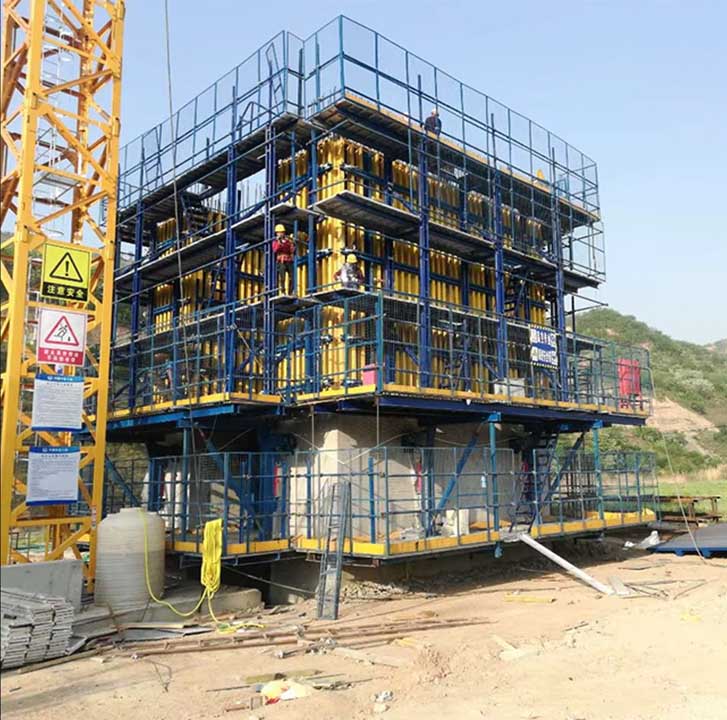
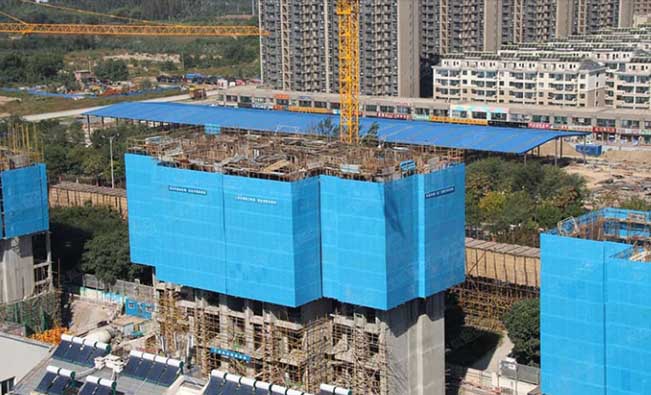
Our company applies the Jump Form/Climbing Formwork system from the Austrian company DOKA in our tower and hotel projects. This is one of the latest integrated structural formwork systems used globally in the construction of concrete cores for high-rise buildings.
This system operates on the principle of self-climbing or sequential jumping, where the work platform and the entire hydraulic concrete formwork are raised to the next level after each pouring cycle, without the need to dismantle the formwork or use tower cranes repeatedly.
Key Advantages of the System:
1- Accelerates the construction process in multi-story towers by up to 40% compared to traditional methods.
2- Higher safety thanks to the enclosed surrounding platforms and integrated access systems.
3- Ideal concrete quality due to the stability of the formwork and the straightness of the vertical surfaces across all floors.
4- Reduces reliance on cranes and on-site energy consumption
Areas of Use:
Residential and commercial towers.
Hotels and central concrete-core office buildings.
Elevator shafts, emergency stairwells, and large vertical structures.
2- Modern Concrete, Insulation, and Roofing Systems in Construction
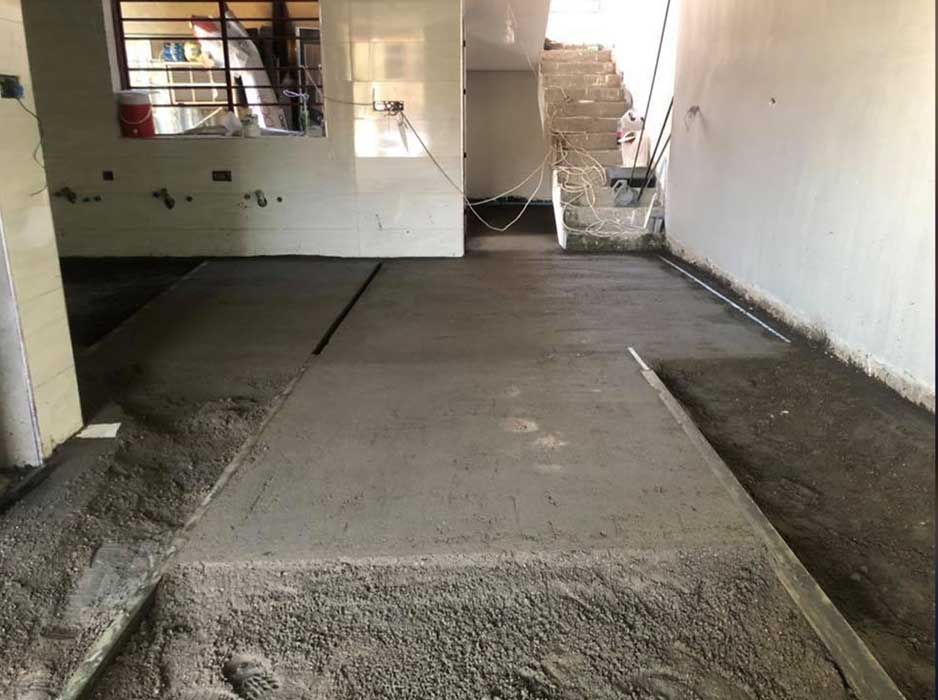
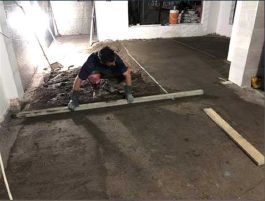
First: Slab Bedding (Floor Screed / Slab Bedding)
Technical Definition:
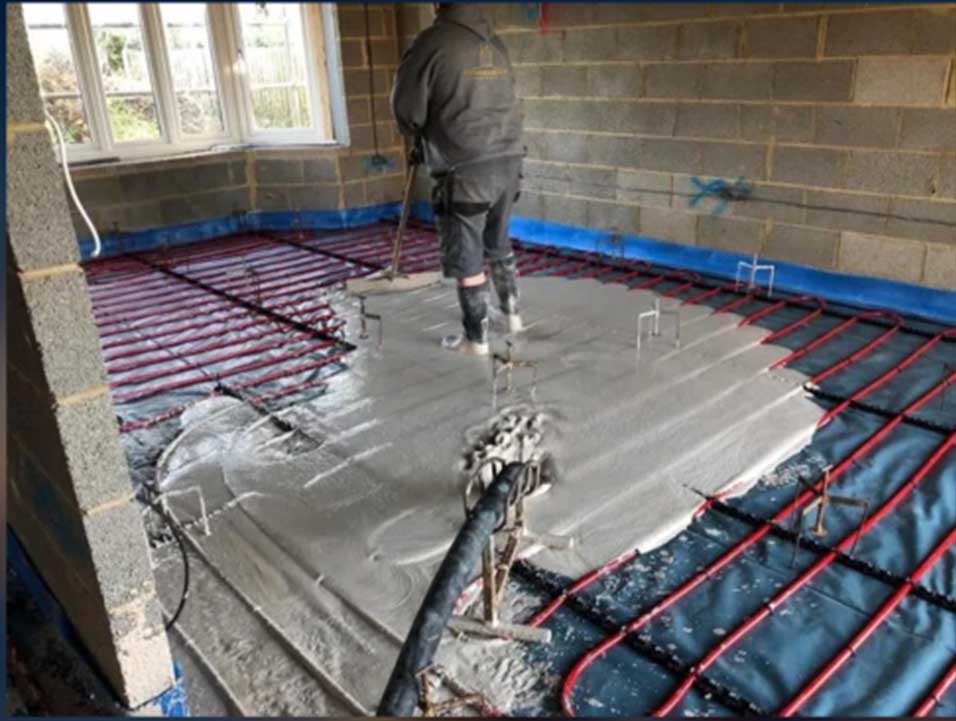
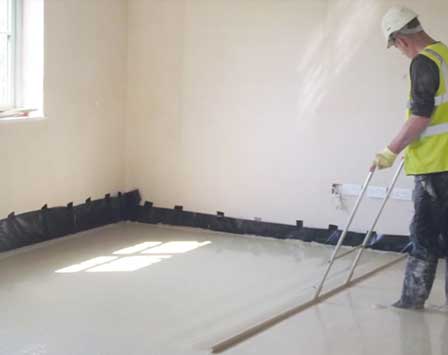
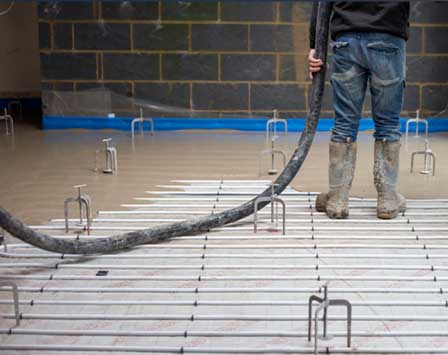
Slab bedding is a lightweight concrete layer poured over the insulation layer or directly over the reinforced concrete to create a level and homogeneous surface suitable for final finishing such as ceramic tiles or parquet flooring.
Scientific Characteristics:
The ideal thickness is 5 to 8 cm in homes, and up to 10 cm in high-load areas (walkways or garages).
Mixing Ratio: Usually 1:3 or 1:4 cement:sand. Adhesives or polypropylene fibers may be added to improve durability.
Leveling and Flatness: A deviation of no more than 5 mm per 2 meters must be achieved (according to ACI and BS codes).
Curing: Spray with water for at least 7 days to ensure uniform hydration and prevent cracking
Purpose:
1- To unify the surface before tiling.
2- To protect the insulation layers underneath
3- Achieving proper drainage slopes in (kitchens and bathrooms).
Second: Sound and Thermal Insulation Systems
1. Thermal Insulation
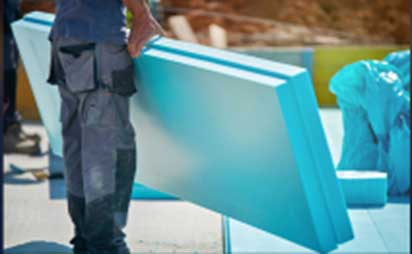
Expanded polystyrene (EPS) or polyurethane (PU) with a very low thermal conductivity coefficient (λ = 0.025-0.035W/mK)
Placed on top of or under the concrete screed layer, depending on whether the insulation system is inverted or direct.
Usually covered with a bitumen waterproofing membrane or PVC membrane.
2. Acoustic Insulation
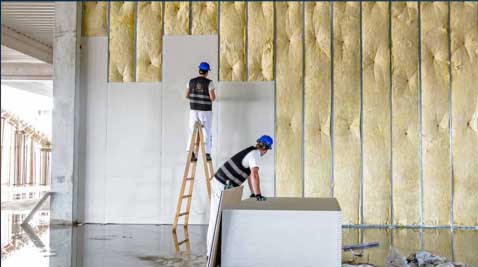
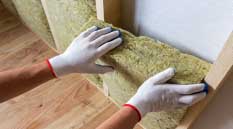
Rock wool or glass wool is used to reduce sound transmission between floors and rooms.
The ideal density ranges from 60 to 120 kg/m³ depending on the location.
Installed between two layers of concrete or in ceiling voids.
Objective:
1. Improve energy efficiency and reduce cooling consumption.
2. Increase acoustic comfort inside the building.
3. Improve the building's rating in sustainability systems such as ESTIDAMA LEED
Third: Raising the Floor Level
Concept:
It is the difference between the natural ground level and the ground floor level – usually between 30 and 60 cm – to ensure
1- Preventing rainwater or street runoff from seeping in.
2- Protecting the building from insects and reptiles coming from the soil.
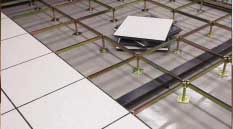
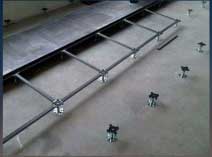
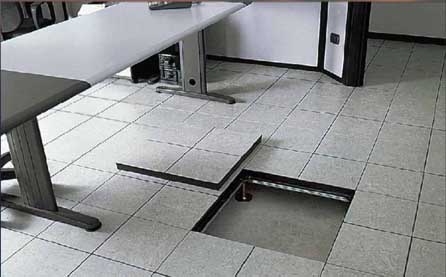
3- Improving ventilation under the floor slab in some systems (Raised Floors).
Practical Application:
The internal backfill is carried out with selected materials (layered compacted sand).
A layer of lean concrete, approximately 10 cm thick, is placed on top. Then insulation, and finally the paving slab
3- Aluminum Formwork Systems
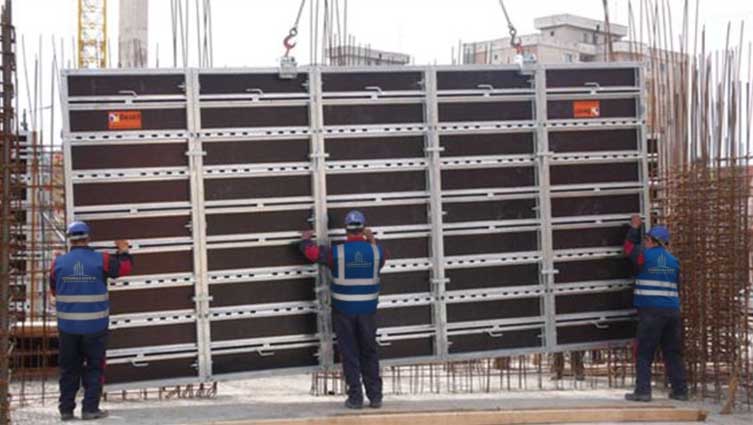
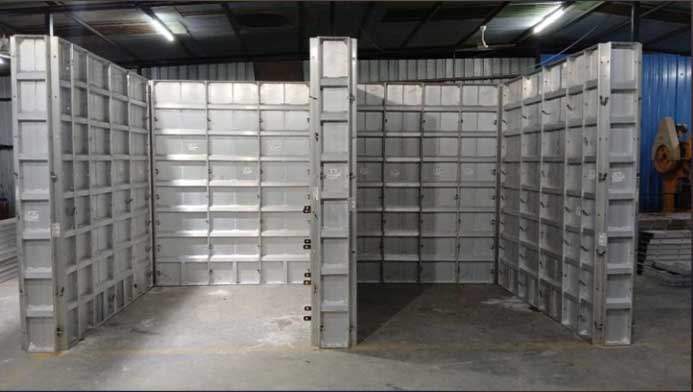
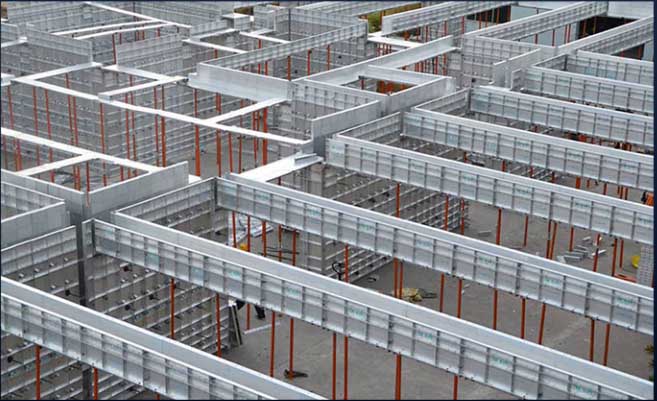
Aluminum formwork systems are among the latest concrete casting technologies in the world. They eliminate the need for traditional formwork by using a lightweight, precision-manufactured metal formwork system that is quickly assembled and disassembled.
It can be reused hundreds of times without any loss of accuracy or rigidity.
The system's main components:
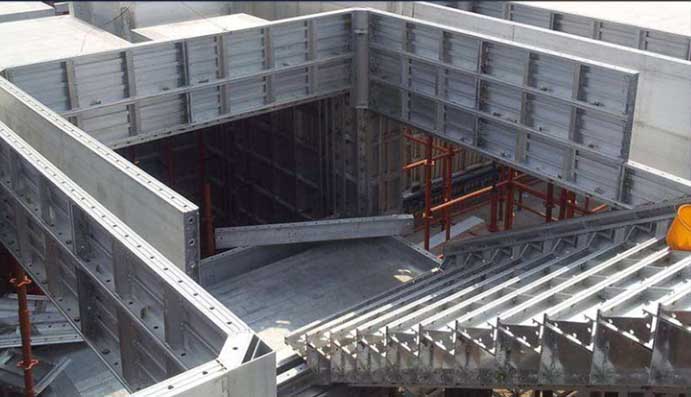
1- Prefabricated aluminum panels with a thickness ranging from 4 mm, equipped with internal reinforcing ribs to ensure stability during casting.
2- Vertical and horizontal props and beams to support the system during casting.
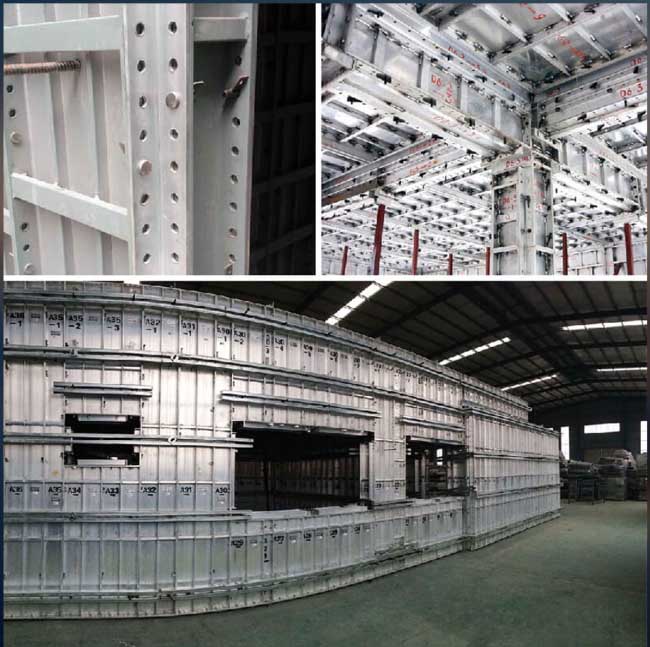
3- Metal pins and wedges for quick formwork assembly and disassembly.
4- Deck panels and stair formwork panels specifically designed to withstand the pressure of the concrete
Mechanical Properties:
1- Low density, approximately one-third that of steel, making formwork easy to transport and install.
2- High corrosion resistance: Aluminum is resistant to rust and moisture, extending its service life.
3- High manufacturing precision: Tolerance does not exceed 0.5 mm, ensuring a high-quality concrete surface finish.
4- Reusability: Formwork can be used up to 250-300 times on average, compared to only 15-20 times with traditional formwork.
Field Process:
Design and manufacturing:
Formwork is designed using CAD/BIM software with precision to match every wall and ceiling in the project.
On-site Installation:
Panels are assembled using a Pin & Wedge system without much welding or screws, allowing for the installation of an entire floor in one day
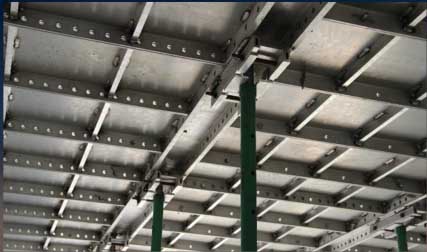
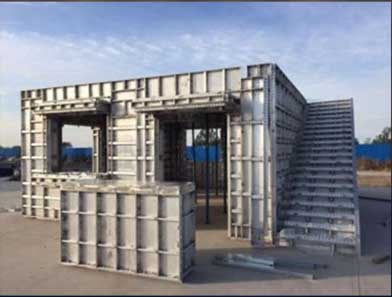
(Field Process) On-Site Installation and Implementation
Casting and Curing:
Concrete is poured directly into the sealed metal formwork, producing a very smooth concrete surface.
Demolition and Reuse:
After 18-24 hours, the formwork is demolition and reinstalled on the next floor or unit
Environmental Impact and Sustainability:
Reduces wood waste by 90%.
Reduces carbon emissions from wood and paint manufacturing.
Increases formwork lifespan to over 5 years with regular maintenance.
The system is LEED Green Construction certified for sustainable building
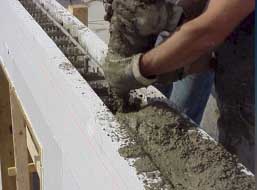
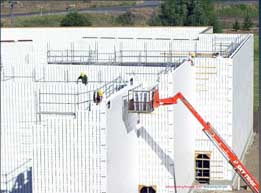
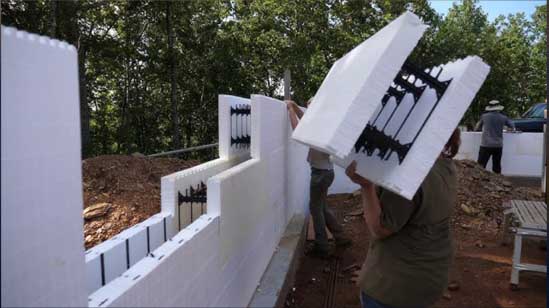
4- ICF System - Insulated Concrete Forms System
Basic System Components:
ICF Units
Hollow polystyrene blocks, typically 120 cm long and 30-40 cm high, containing vertical cavities filled with concrete.
Internal Ties
Made of reinforced plastic or metal, these ties stabilize the sides and prevent bulging during pouring.
Reinforcement
Placed inside the vertical and horizontal cavities before pouring to strengthen the wall.
Concrete:
Poured with a calculated mix consistency (12-14 cm = Slump) to ensure even distribution within the cavities.
Sustainability and Environmental Impact:
Reduced carbon emissions due to lower energy consumption.
80% reduction in concrete and wood waste.
Forms are made from recyclable EPS.
Certified under LEED Green Building Codes worldwide
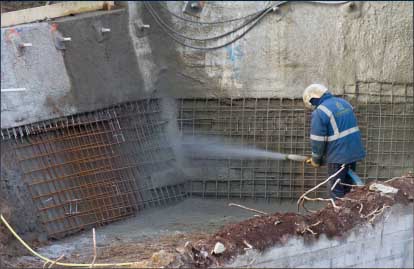
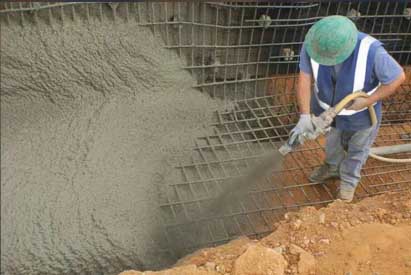
5 - Shotcrete System -Shotcrete / Sprayed Concrete
A technique that uses high-pressure spraying of a concrete mix directly onto reinforcement surfaces to create free-form walls or ceilings without the need for traditional formwork.
A special pump is used to deliver the concrete through a hose, then air and water are injected at the nozzle to ensure strong adhesion to the target surface
Implementation Mechanism:
1- Prepare a metal reinforcement structure according to the required shape.
2- Spray the concrete using dry mix (shotcrete or wet mix) equipment.
3- Level the layer manually or mechanically to achieve the required thickness
Technical Characteristics:
High density (up to 2400 kg/m³) thanks to high ejection velocity.
Excellent adhesion to vertical and curved surfaces.
Compressive strength exceeding 30-40 MPa with proper curing.
No need for traditional formwork, reducing time and cost.
Marketing Advantages:
1. Faster execution, up to 4x faster than traditional construction.
2. Ideal for organic and curved shapes.
3. Reduces material and formwork waste by more than 30%
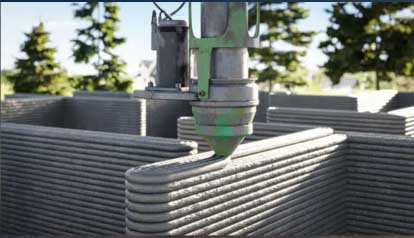
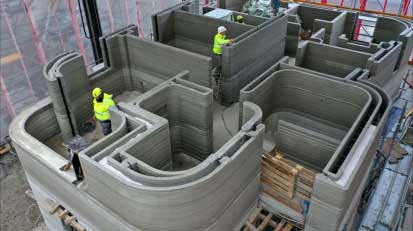
6- 3D Concrete Printing System
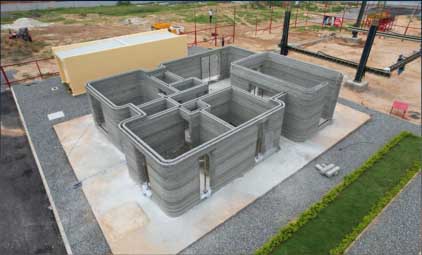
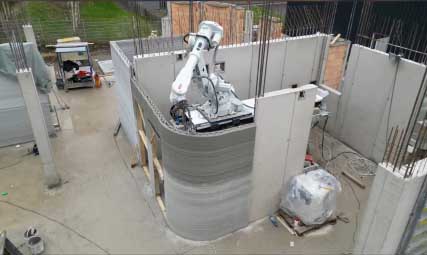
An advanced digital technology that uses a large robotic printer to extrude a special concrete mix layer by layer according to a digital model (CAD/BIM).
This technology is revolutionary in the concept of on-site construction because it minimizes human intervention.
Implementation Mechanism:
1- Prepare a metal reinforcement structure according to the required shape.
2- Spray the concrete using shotcrete equipment (Wet Mix or Dry Mix).
3- Level the layer manually or mechanically to achieve the required thickness
Technical Features
High manufacturing quality thanks to the closed production environment.
Completion speed exceeding 70% compared to traditional construction.
Option to integrate thermal and acoustic insulation within the wall (PU/EPS Core).
Design flexibility in openings, ends, and surface finishes
Implementation Mechanism:
1- Prepare a metal reinforcement structure according to the required shape.
2- Spray the concrete using shotcrete equipment (Wet Mix or Dry Mix).
3- Level the layer manually or mechanically to achieve the required thickness

Commander Enterprises © 2022 All Rights Reserved